year 8 english comprehension pdf with answers
Year 8 English Comprehension: A Comprehensive Plan
Navigating Year 8 comprehension requires focused practice; readily available PDF resources, complete with detailed answer keys, significantly bolster student understanding and skill development.
Year 8 marks a pivotal stage in English comprehension development. Students transition from simply decoding text to critically analyzing it, demanding a more nuanced understanding of language and structure. This year focuses on building skills necessary for interpreting complex ideas, identifying authorial intent, and forming well-supported opinions.
Successfully navigating this stage often relies on consistent practice. That’s where readily accessible resources, like Year 8 English comprehension PDF worksheets with answers, become invaluable. These resources provide targeted exercises, allowing students to hone their abilities in a structured manner.

Utilizing these PDFs isn’t just about finding the ‘right’ answer; it’s about understanding the process of arriving at that answer. Examining the provided solutions helps students identify their weaknesses and refine their strategies. Consistent engagement with these materials builds confidence and prepares them for more challenging texts ahead.
Core Skills Assessed in Year 8 Comprehension
Year 8 comprehension assessments evaluate a range of interconnected skills. Primarily, students are expected to demonstrate proficiency in identifying the main idea and supporting details within a text. A strong vocabulary and the ability to decipher meaning from context are also crucial, often tested through targeted questions within Year 8 English comprehension PDF exercises with answers.
Furthermore, assessments gauge a student’s capacity to recognize an author’s purpose – whether to inform, persuade, or entertain. Critical thinking skills are paramount, requiring students to make inferences and draw logical conclusions.
These PDF resources often include questions designed to assess these specific areas, providing students with focused practice. Analyzing the answer keys allows them to understand why certain answers are correct, reinforcing their comprehension strategies and building a solid foundation for future learning.
2.1 Identifying Main Ideas
Successfully pinpointing the main idea is foundational to comprehension. Students must learn to distinguish between central thoughts and supporting details. Often, the main idea is explicitly stated in a topic sentence, frequently found at the beginning of a paragraph. However, it can also be implied, requiring students to synthesize information from across the text – a skill honed through practice with Year 8 English comprehension PDF worksheets with answers.
Effective strategies include asking “What is the author trying to tell me?” and summarizing each paragraph in a single sentence. Utilizing PDF resources allows for repeated exposure to diverse texts, strengthening this ability.
Analyzing the provided answer keys helps students understand how to identify the core message and avoid being misled by less important information, building confidence and analytical skills.
2.2 Understanding Vocabulary in Context
A robust vocabulary isn’t about memorizing definitions, but understanding how words function within a text. Year 8 English comprehension PDF exercises with answers are invaluable for developing this skill. Students learn to decipher meaning through surrounding sentences, identifying clues like synonyms, antonyms, and explanations provided by the author.
Encourage students to substitute potential definitions into the sentence to see if they make logical sense. These PDF resources often present challenging vocabulary within varied contexts, forcing students to apply their reasoning skills.
Reviewing the answer keys isn’t just about finding the ‘right’ answer; it’s about understanding the reasoning behind it, solidifying their contextual understanding and expanding their linguistic repertoire;
2.3 Recognizing Author’s Purpose
Determining why an author wrote something is crucial for deep comprehension. Is the author aiming to inform, persuade, entertain, or perhaps a combination? Year 8 English comprehension PDF worksheets with answers frequently focus on this skill, presenting texts followed by questions specifically designed to uncover the author’s intent.
Look for signal words – those that indicate a persuasive argument (e.g., ‘should,’ ‘must,’ ‘believe’) or an informative approach (e.g., ‘facts,’ ‘evidence,’ ‘research’). Analyzing the tone and style also provides clues.
The provided answer keys should explain how the author’s purpose is revealed, not just state it, fostering analytical thinking. Practicing with diverse texts in these PDFs builds confidence in identifying purpose.

Common Text Types in Year 8 English
Year 8 English comprehension PDF resources with answers expose students to a variety of text types, mirroring real-world reading experiences. Mastering these is key to success. Expect frequent encounters with narrative texts – short stories and excerpts from novels – testing plot understanding and character analysis.
Informative texts, like articles and reports, demand identifying main ideas and supporting details. Persuasive texts, including arguments and reviews, require recognizing bias and evaluating evidence.
Effective PDF practice includes questions tailored to each type. For example, narrative questions might focus on theme, while informative questions assess factual recall. Analyzing these diverse formats builds versatile reading skills.
3.1 Narrative Texts (Stories)
Year 8 English comprehension PDFs with answers frequently feature narrative texts, demanding students analyze plot development, character motivations, and setting’s influence. Questions often explore themes – the underlying message – and require identifying key events driving the story forward.
Understanding characterization is crucial; students must infer traits from actions and dialogue. Analyzing the narrative voice (first-person, third-person) and its impact on perspective is also common.
PDF exercises should include questions about conflict (internal and external) and resolution. Strong resources will also assess students’ ability to recognize literary devices like foreshadowing and symbolism within the story, enhancing their analytical skills.
3.2 Informative Texts (Articles, Reports)
Year 8 English comprehension PDFs with answers often include informative texts like articles and reports, testing a different skillset. These focus on factual recall, understanding complex information, and identifying the main idea presented. Questions frequently assess the ability to distinguish between fact and opinion.
Analyzing text structure – headings, subheadings, bullet points – is vital for comprehension. Students need to interpret data presented in charts or graphs, and understand the author’s purpose in conveying information.

PDF exercises should challenge students to summarize key points and explain concepts in their own words. Evaluating the credibility of sources and recognizing bias are also important skills assessed within these texts.
3.3 Persuasive Texts (Arguments, Reviews)
Year 8 English comprehension PDFs with answers frequently utilize persuasive texts – arguments and reviews – demanding critical thinking. These texts aim to convince the reader of a particular viewpoint, employing techniques like emotive language and rhetorical questions.
Comprehension questions focus on identifying the author’s argument, evaluating the evidence presented, and recognizing persuasive devices. Students must discern the author’s bias and consider alternative perspectives.
PDF practice should include analyzing the effectiveness of the author’s techniques and forming reasoned judgments about the validity of the claims made. Understanding how language is used to influence opinions is crucial. Exercises often ask students to construct their own persuasive responses, demonstrating their understanding.
Strategies for Effective Reading
Utilizing effective reading strategies is paramount when tackling Year 8 English comprehension PDFs with answers. Students should move beyond simply decoding words and actively engage with the text.
Pre-reading techniques, like previewing headings and images, establish context. During reading, encourage students to highlight key information and annotate passages with questions or summaries. Post-reading reflection, involving summarizing the main ideas, solidifies understanding.
These PDF resources often benefit from repeated readings, each time focusing on a different aspect – vocabulary, author’s purpose, or underlying themes. Breaking down complex passages into smaller chunks improves comprehension. Consistent practice of these strategies builds confidence and enhances performance.
4.1 Skimming and Scanning
When working with Year 8 English comprehension PDFs with answers, mastering skimming and scanning techniques is crucial for efficient reading. Skimming involves rapidly reading a text to grasp the general idea, focusing on headings, subheadings, and the first/last sentences of paragraphs.
Scanning, conversely, is a targeted search for specific information – dates, names, keywords. Students should practice identifying keywords within comprehension questions before scanning the text.
These skills are particularly useful when time is limited or when locating answers within lengthy passages. Encourage students to practice both techniques regularly, using the answer keys to verify their accuracy. Effective skimming and scanning significantly improve comprehension speed and overall performance.
4.2 Active Reading Techniques (Highlighting, Note-Taking)
Utilizing active reading strategies while working through a Year 8 English comprehension PDF with answers dramatically enhances understanding and retention. Highlighting key information – main ideas, supporting details, and unfamiliar vocabulary – makes it easily retrievable.

However, encourage students to highlight judiciously, avoiding excessive marking. Complement highlighting with concise note-taking. Summarizing paragraphs in their own words, creating mind maps, or listing key arguments fosters deeper engagement.
Comparing notes with the provided answer key allows students to assess their comprehension and identify areas needing further review. These techniques transform passive reading into an active learning process, improving analytical skills.
4.3 Making Inferences
Successfully tackling a Year 8 English comprehension PDF with answers often hinges on the ability to make inferences – reading between the lines. Inference questions don’t provide direct answers within the text; instead, students must use clues and their own reasoning skills.
Encourage students to identify textual evidence supporting their inferences. What does the author imply, rather than explicitly state? Consider character motivations, setting details, and the overall tone.
When reviewing answers, analyze why certain inferences are valid while others aren’t. This process strengthens critical thinking and analytical abilities. Practicing with varied texts builds confidence in interpreting subtle cues and forming logical conclusions.
Question Types: A Breakdown
Utilizing a Year 8 English comprehension PDF with answers effectively requires understanding common question formats. Questions generally fall into three categories: literal, inferential, and evaluative.
Literal questions demand direct recall of information stated in the text. Inferential questions necessitate ‘reading between the lines’, using clues to deduce answers not explicitly provided. Evaluative questions challenge students to form judgments and opinions based on the text, justifying their reasoning.
Practice identifying each question type. Analyzing answer explanations within the PDF helps students understand why a particular answer is correct. Mastering this breakdown improves comprehension skills and test performance, fostering a deeper engagement with the material.
5.1 Literal Questions (Directly from the Text)
Literal questions are the most straightforward type found in a Year 8 English comprehension PDF with answers. These questions require students to locate explicitly stated information within the passage. The answer is always present, often using the same wording as the question or very similar phrasing.
Examples include: “What color was the cat?” or “Where did the story take place?”. Successfully answering these questions demonstrates basic reading comprehension and attention to detail. When practicing with a PDF, highlight the exact sentence containing the answer before selecting your choice.
Focus on keywords within the question and scan the text for those same words. Mastering literal recall is foundational for tackling more complex question types later on.
5.2 Inferential Questions (Reading Between the Lines)
Inferential questions, common in a Year 8 English comprehension PDF with answers, demand more than simple recall. They require students to “read between the lines” and draw conclusions based on evidence implied within the text, not directly stated.

Consider this: the text might describe a character’s actions and dialogue, and the question asks about their feelings. You must infer the emotion based on the provided details. Look for clues – word choice, character interactions, and the overall context.
Practice identifying supporting evidence. A good answer isn’t just a guess; it’s a logical deduction backed by textual proof. Many PDFs provide explanations for correct answers, helping students understand the reasoning behind inferences.

5.3 Evaluative Questions (Forming Judgments)
Evaluative questions, frequently found within a Year 8 English comprehension PDF with answers, represent the highest level of comprehension. They challenge students to move beyond understanding what the text says, to critically assess how and why it’s presented.
These questions often ask for opinions – “Do you agree with the author’s viewpoint?” or “Was this a successful piece of writing?” – but require justifications rooted in the text. A simple “yes” or “no” is insufficient; students must articulate their reasoning.
Strong answers demonstrate an understanding of the author’s purpose, techniques, and potential biases. PDFs with answer keys often model effective responses, showcasing how to construct well-supported arguments and form informed judgments about the text.
Tackling Difficult Vocabulary
A common challenge in Year 8 English comprehension, and frequently addressed in PDF practice materials with answers, is encountering unfamiliar vocabulary. Simply skipping words hinders understanding and impacts accurate responses to comprehension questions.
Effective strategies are crucial. Students should first attempt to decipher meaning from the context of the sentence and surrounding paragraphs. Look for clues – definitions, examples, or restatements – within the text itself.
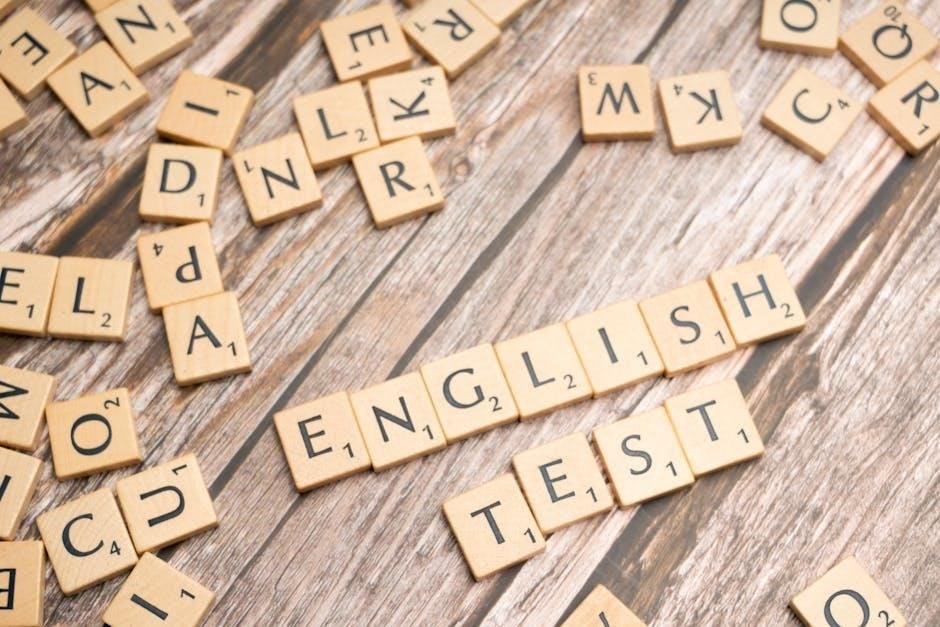
When context fails, utilizing a dictionary or thesaurus becomes essential. However, encourage students to choose definitions that best fit the text’s overall meaning. Answer keys in comprehension PDFs often provide vocabulary support, explaining challenging words and their relevance to the passage.
6.1 Using Context Clues
Year 8 English comprehension PDFs with answers often emphasize the importance of utilizing context clues – hints within the text – to decipher unfamiliar words. This skill moves students beyond rote memorization and fosters independent reading comprehension.
Several types of context clues exist. Definitions are directly stated within the sentence. Examples illustrate the word’s meaning. Restatements rephrase the word in simpler terms. Comparisons highlight similarities or differences. Contrast clues point out opposing meanings.
When faced with an unknown word, students should read the surrounding sentences carefully. Identifying these clues allows them to infer the word’s meaning without immediately reaching for a dictionary. Practice passages, particularly those with provided answers, demonstrate how context clues function in real-world reading.
6.2 Utilizing a Dictionary/Thesaurus
While context clues are invaluable, sometimes a dictionary or thesaurus is essential when working through Year 8 English comprehension PDFs with answers. These tools provide precise definitions and expand vocabulary.
Dictionaries offer multiple definitions, pronunciations, and etymologies. Students should select the definition that best fits the context of the passage. Encourage them to note the part of speech (noun, verb, adjective, etc.).
Thesauruses are useful for understanding nuances in meaning and finding synonyms. This enhances writing skills and allows for a more sophisticated understanding of the text. However, caution students against simply substituting words without considering their precise connotations.

Digital dictionaries and thesauruses are readily available, but learning to navigate a physical version is also beneficial. Consistent use of these resources builds vocabulary and improves comprehension.
Analyzing Author’s Techniques
Successfully tackling Year 8 English comprehension PDFs with answers often hinges on identifying how authors craft their messages. It’s not just what is said, but how it’s said that matters.
Authors employ various techniques to engage readers and convey meaning. Recognizing these – such as imagery, symbolism, and sentence structure – deepens understanding. Pay attention to word choice; is it formal or informal? Does it evoke strong emotions?
Consider the author’s perspective and potential biases. How does their background or beliefs influence the text? Identifying these elements allows for a more critical and nuanced interpretation.
Practice analyzing passages from comprehension PDFs, specifically focusing on the author’s stylistic choices. This skill is crucial for higher-level comprehension and analytical writing.
Identifying Figurative Language (Similes, Metaphors)
Year 8 English comprehension PDFs with answers frequently test understanding of figurative language. Recognizing similes and metaphors is key to unlocking deeper meaning within texts.
Similes directly compare two things using “like” or “as” – for example, “brave as a lion.” Metaphors create an implied comparison, stating something is something else – “the world is a stage.”
Authors use these devices to create vivid imagery and enhance understanding. Don’t take these phrases literally; instead, consider what the author intends to convey through the comparison.
Practice identifying these figures of speech within comprehension passages. Ask yourself: what two things are being compared, and what effect does this comparison have on the overall meaning? Mastering this skill improves analytical abilities.
Recognizing Tone and Mood
Year 8 English comprehension PDFs with answers often assess your ability to discern an author’s tone and the resulting mood of a passage. These are distinct but related concepts.
Tone reflects the author’s attitude towards the subject matter – is it formal, informal, sarcastic, optimistic, or pessimistic? Mood is the feeling the text evokes in the reader – joy, sadness, suspense, or tranquility.
Clues to tone include word choice (diction), sentence structure, and imagery. Mood is created through descriptive language and the overall atmosphere of the writing.
When practicing with comprehension materials, pay attention to how the author’s language makes you feel. Identifying tone and mood demonstrates a sophisticated understanding of the text and the author’s intent. Careful analysis is crucial.
Practice Resources: Where to Find Year 8 Comprehension PDFs with Answers
Finding quality Year 8 English comprehension PDFs with answers is essential for effective preparation; Several online platforms offer free and paid resources. Twinkl and Education.com provide a range of downloadable worksheets and passages, often categorized by difficulty and text type.
BBC Bitesize offers interactive comprehension exercises and supporting materials. Khan Academy, while broader in scope, includes relevant reading comprehension practice. Many schools also provide access to digital resources through their learning platforms.
Searching specifically for “Year 8 reading comprehension worksheets with answers PDF” on Google will yield numerous results. Always preview the materials to ensure they align with your curriculum and learning objectives. Remember to check the answer keys carefully!
Example Comprehension Passage & Questions (Narrative)
The Old Lighthouse Keeper
Old Man Hemlock had been the lighthouse keeper for fifty years. He’d seen storms rage and ships sail, always a silent guardian. One foggy evening, a small boat appeared, lost and battered. A young girl, Maya, was the sole passenger. Hemlock, gruff but kind, sheltered her. Maya, fascinated by his stories, learned about the sea’s power and the lighthouse’s vital role.
Questions:
- What was Old Man Hemlock’s job?
- Describe Maya’s condition when she arrived.
- How did Hemlock treat Maya?
- What did Maya learn from Hemlock?
- What mood does the passage create?
(Answers available in a separate key – see accompanying PDF).
Example Comprehension Passage & Questions (Informative)
The Amazon Rainforest
The Amazon rainforest, spanning nine countries, is the world’s largest tropical rainforest. It’s renowned for its incredible biodiversity, housing approximately 10% of known species on Earth. The rainforest plays a crucial role in regulating global climate patterns, producing 20% of the world’s oxygen. Deforestation, driven by agriculture and logging, poses a significant threat to its survival. Conservation efforts are vital to protect this invaluable ecosystem and the indigenous communities who call it home.
Questions:
- Where is the Amazon rainforest located?
- What percentage of the world’s species live there?
- What role does the rainforest play in climate regulation?
- What is a major threat to the Amazon?
- Why is conservation important?

(Answers available in a separate key – see accompanying PDF).